
Gogebic VINELink Release Coverage
Michigan calls its service MI-VINE, short for Victim Information and Notification Everyday. The official Michigan MI-VINE page describes a free, confidential service available through the web, telephone, and email. Members of the public may check covered custody or court status and register for notice of changes. The automated telephone line is 800-770-7657 and operates all day. The state service can report covered events such as release, transfer, and escape. Those event words are not interchangeable.
Gogebic County does not publish a county participation roster on its own jail page. A search must therefore test the specific person in the live system. MI-VINE can carry participating county-jail and Michigan Department of Corrections events, but it is not a federal locator. It does not replace the Bureau of Prisons or ICE systems. Nor does it establish that every Gogebic County booking has a searchable record. If a name is missing, call Gogebic County Jail and use the court or records-request route rather than concluding that no custody event occurred.
The state’s explanation of MI-VINE for MDOC cases also matters. A person may leave Gogebic County Jail as a transfer to state prison. That jail departure is not a community release. Once MDOC receives the person, OTIS becomes the continuing source for prison, parole, and discharge status, while MI-VINE supplies notice of covered changes.
The official overview below shows the state layer behind a Gogebic County VINELink release check.
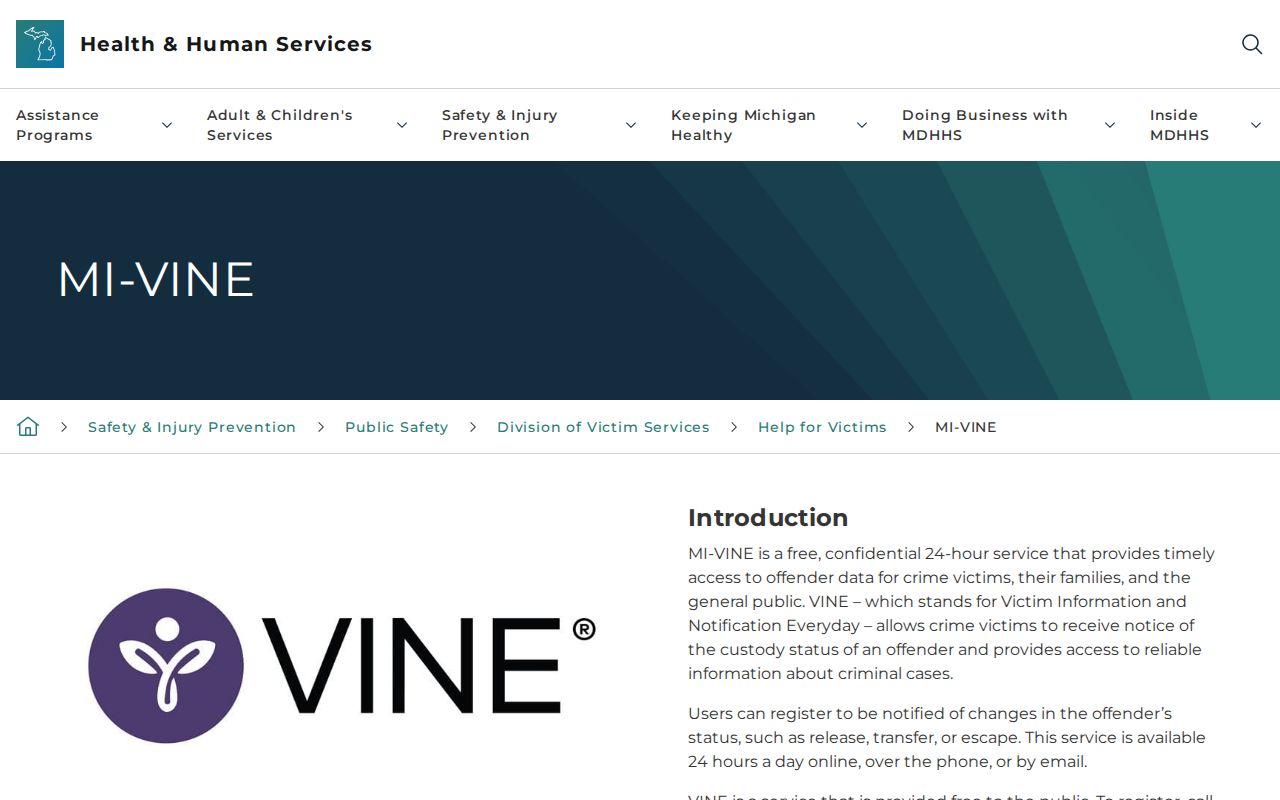
That state page is the sound starting point for service scope, telephone access, and registration guidance before using the live search.
Search One Gogebic Inmate
Use VINELink for one person, not as a broad Gogebic County release list. Begin with enough identity information to separate people who share a name. An offender or custody ID is stronger than a name alone when it is available. After a match opens, compare the agency, status, and event details. A record tied to another Michigan county or another corrections agency is not proof of a Gogebic County Jail event.
- Open VINELink and select Michigan.
- Choose the offender or custody search shown in the current interface.
- Enter the person’s name or known ID. Check spelling and use available identity details to avoid a namesake.
- Open the matching record. Read the responsible agency, custody status, and event information together.
- If the result is missing or unclear, call MI-VINE or Gogebic County Jail, then consult the local court and release record.
Live labels can change, so the interface should control the exact clicks. The VINELink search captured in the image is a visual reference, not a promise that every local booking appears. Each match still needs identity verification.
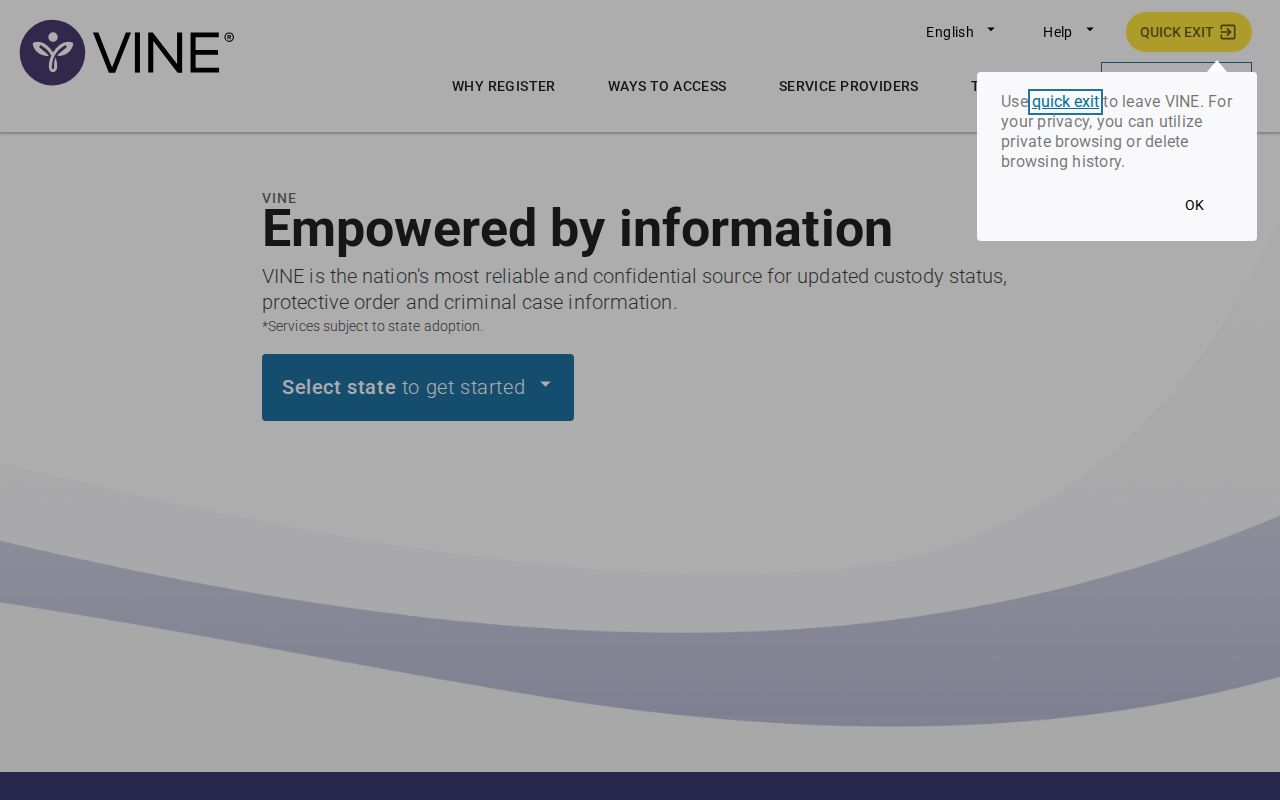
A current screen can guide a search, but the agency-created jail, court, or MDOC record remains the better proof of what occurred.
When several results look alike, do not guess. Compare the reporting agency and any identifier shown. Then use the custody type to choose the next source. A county-jail case belongs with the Gogebic jail and the District or Circuit Court. An MDOC case belongs in OTIS. Federal sentenced custody belongs in the BOP locator, while immigration custody uses ICE’s locator.
Gogebic VINELink Result Fields
A Gogebic County VINELink result is a status and notification record. It should not be read as a complete booking sheet, court judgment, or permanent release archive. Exact live fields can vary by agency and event, but the research supports checking the core items below. Each one answers a narrow question.
| Field or item | What it can show |
|---|---|
| Name or identifier | Helps distinguish the selected person from a namesake. |
| Reporting agency | Shows which jail or corrections system supplied the custody event. |
| Custody status | Indicates the current or most recently supplied covered status. |
| Event type | May distinguish release, transfer, escape, or another reported change. |
| Notification options | Shows available phone, email, or text enrollment choices. |
A release event says the supplying agency reported a release. It does not explain the legal basis, bond terms, sentence completion, or another hold. A transfer event is narrower still. It records movement between authorities or facilities, not freedom from custody. If exact release time, authority, or destination matters, request the existing Gogebic County Jail release record and inspect the court order.
Register Gogebic Release Alerts
Registration should occur before the expected Gogebic County custody change. Start from the individual record, not a general search page. Choose the available notification method and provide the destination requested by the service. Telephone registration uses an acknowledgment PIN. Email and text work differently and do not use that phone PIN.
- Open the confirmed custody record and select the registration or notification option.
- Choose telephone, email, or text where the live record offers it.
- Enter the requested contact destination and complete the service’s confirmation step.
- For telephone notice, create and remember the PIN. When called, listen to the message and enter the PIN followed by the pound sign.
- Read the event type when the alert arrives, then verify it through the responsible jail, court, or corrections agency.
The official MI-VINE brochure says calls continue until acknowledged or for up to 24 hours. An email or text produces one notification for a covered custody or court-status change. A missed call therefore behaves differently from an overlooked text. Keep the phone PIN private but accessible to the registrant.
MI-VINE is most useful as an early signal. It is not described as a permanent historical discharge archive. If release already occurred, the result may show a changed status or may no longer preserve a durable public entry. The Gogebic County released-inmate search path explains how jail, court, OTIS, and FOIA sources can fill that gap.
Note: Registration predicts no outcome; it asks the system to send notice if a covered agency reports a qualifying change.
Gogebic RegistrationLink Transfer Alerts
Michigan’s RegistrationLink is the distinctive local layer for a Gogebic County case. It was designed to carry a MI-VINE registration when a person moves between a county jail and state prison. In the past, a user might have needed to register again after a transfer. The linked registration reduces that gap as the custody authority changes.
This feature is especially useful when a Gogebic County Jail departure is actually an MDOC transfer. The first alert may describe movement from the county jail. Later status belongs to the state prison system. RegistrationLink can help preserve notice through that transition, but it does not turn the transfer into a community release. OTIS should then be checked for the person’s prison, parole, or recent discharge status.
The distinction protects against a common error. “Left the jail” describes only the facility the person departed. It does not state where the person went. A court judgment and OTIS record can show an MDOC sentence, while the jail release entry may identify the receiving authority. The alert is the prompt to make those checks.
Gogebic VINELink Release Limits
No single result resolves every Gogebic County release question. MI-VINE covers participating Michigan custody and court events. It does not cover BOP or ICE custody, and the official sources do not promise a permanent released-result retention period. A no-result may reflect spelling, timing, agency coverage, a transfer, or a past event that is no longer visible. It is not proof that the person was never held.
Timing can also differ. A court may enter an order, the jail may process the physical exit later, and MI-VINE may send notice after its data feed receives the event. Those timestamps measure separate stages. When they conflict, use the court order for legal authority and the jail record for the physical county-jail departure. For a state prisoner, OTIS Date Paroled is the public indicator of departure to parole.
Use the correct fallback. Call Gogebic County Jail at 906-667-0203 for present county custody. Search D98 or C32 MiCOURT for the legal case. Request the booking/release entry when exact date, time, type, or destination is needed. Search OTIS when MDOC custody or supervision applies. A federal or immigration case needs its own federal locator.
District and Circuit Court records answer different parts of a Gogebic case. The 98th District Court covers misdemeanors and the preliminary stages of a felony. The 32nd Circuit Court covers felony adjudication. Their public dockets may show bond action, dismissal, sentence, jail credit, probation, or a transfer order. A docket event can explain why the jail had authority to act, but it does not always record the moment the person cleared the exit process. Match the case to the right person and read the order itself.
A county release record is the stronger route for the physical event. Ask for the existing booking/release sheet or jail-register entry, using a narrow date range and enough identity detail for the agency to find the record. Request the release date and time, release type or authority, and receiving agency when a transfer may have occurred. That request seeks a record already kept in ordinary work. It does not ask staff to create a new account of the event.
OTIS serves a separate role after an MDOC transfer. Search All when the expected status is uncertain, then read PRISON, PAROLE, DISCHRG, and absconder labels with care. PAROLE confirms departure from prison to supervised release. DISCHRG means MDOC jurisdiction ended for that sentence, subject to the official definition’s death caveat. An absconder status is an unauthorized absence from supervision, not a lawful release. These distinctions keep a brief MI-VINE alert from becoming a broader claim than the agency reported.