
Ojibway Facility Is Closed
Ojibway Correctional Facility was an MDOC prison in Marenisco Township. The official MDOC closed-facility page says it began as Camp Ojibway in 1971, later operated as a secure male prison, and closed on December 1, 2018. MDOC reports capacity of up to 1,180. These are historical facts, not signs of present custody.
The official history is preserved in the successful source capture below.
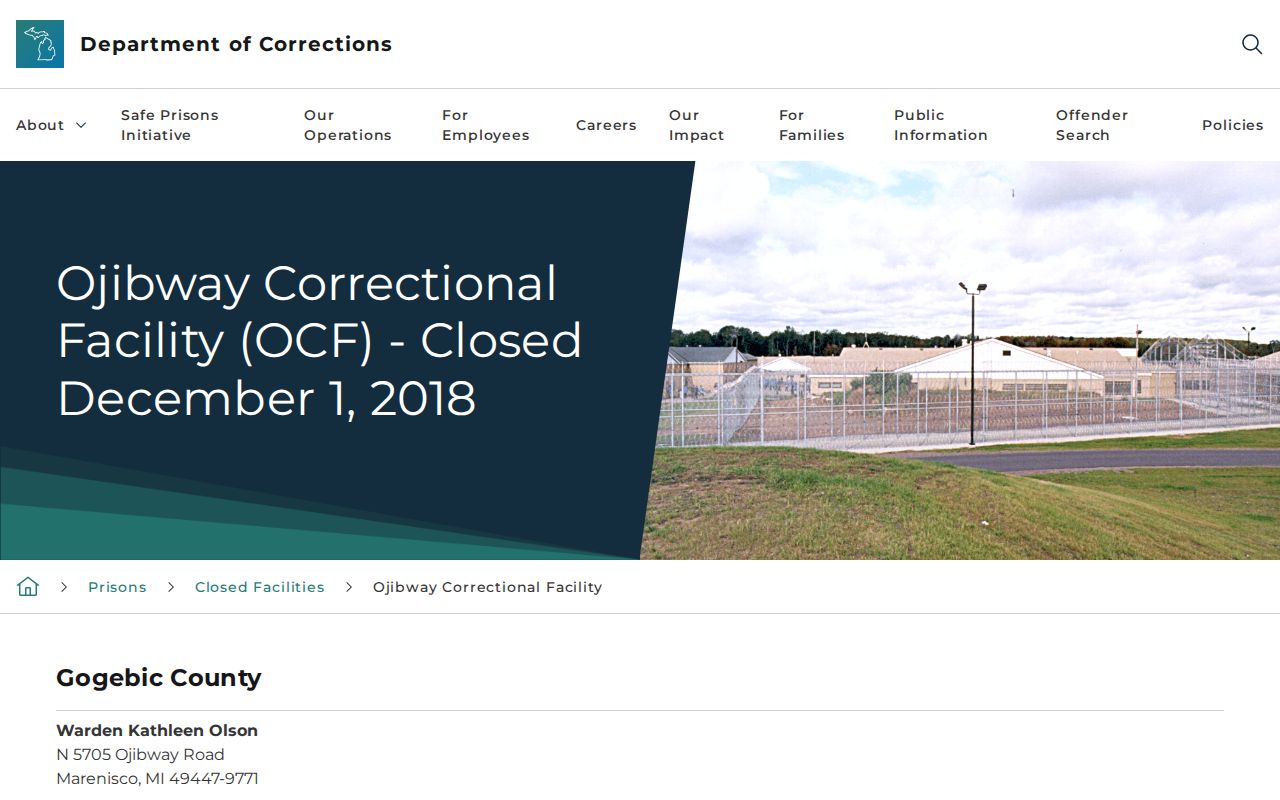
The MDOC page controls over an old directory or third-party listing that still presents Ojibway as active.
Former Ojibway Prisoner Outcomes
A person historically housed at Ojibway could have transferred to another MDOC prison before parole or discharge. Parole means the person left prison but remained under MDOC supervision. Discharge means the named MDOC jurisdiction ended, subject to the agency’s warning that a `DISCHRG` status can also reflect death. A transfer means custody continued at a new facility. None of those later events should be assigned to Ojibway without the record.
| Record result | Careful meaning | What it does not prove |
|---|---|---|
| Historical Ojibway location | The person was associated with the former prison | Present custody or release from Ojibway |
| PAROLE with Date Paroled | The person left an MDOC prison for supervision | That Ojibway was the release facility |
| DISCHRG | MDOC jurisdiction for that sentence ended | Automatic proof of community return |
| Current prison location | MDOC reports a later placement | A county-jail custody event |
The agency-created record should name the event and date. An old Ojibway address copied across search results cannot supply that proof.
Closure also changes how a historic location should be read. A transfer record may place a prisoner at Ojibway for one span, then at another institution long before parole. The final releasing facility, parole unit, and supervision office can all differ from the older location. State the history in sequence when the documents support it. Do not compress years of MDOC movement into the claim that the person was “released from Ojibway” merely because that name appears in an older profile or news item.
Search Ojibway Release Records
The Offender Tracking Information System, or OTIS, is the correct public locator for an MDOC prisoner, parolee, probationer, or recently discharged person. It is not the Gogebic County jail roster. Search by MDOC offender number whenever possible. A unique number is more reliable than a name and avoids confusion between people with similar identities.
- Open OTIS and enter the offender number. If it is unknown, enter at least the last name and narrow the result with available fields.
- Select “All” when the later status is uncertain. Parolees and Discharged are useful only when that status is already plausible.
- Open the matching profile. Compare offender number, name, birth date, conviction data, photo when available, status, and location.
- Read Date Paroled, Parole Board Jurisdiction Date, and Maximum Date together. Only Date Paroled records an actual prison departure to parole.
- Use the formal MDOC record route if the person is outside OTIS’s public window or the historical transfer chain matters.
OTIS generally includes discharged people for three years after their most recent MDOC discharge. A new supervision term restarts the public period. Older cases, protected information, a set-aside, or a spelling problem can cause no result. Absence from OTIS does not erase the historical Ojibway confinement.
The statewide MDOC search interface appears in the source capture below.
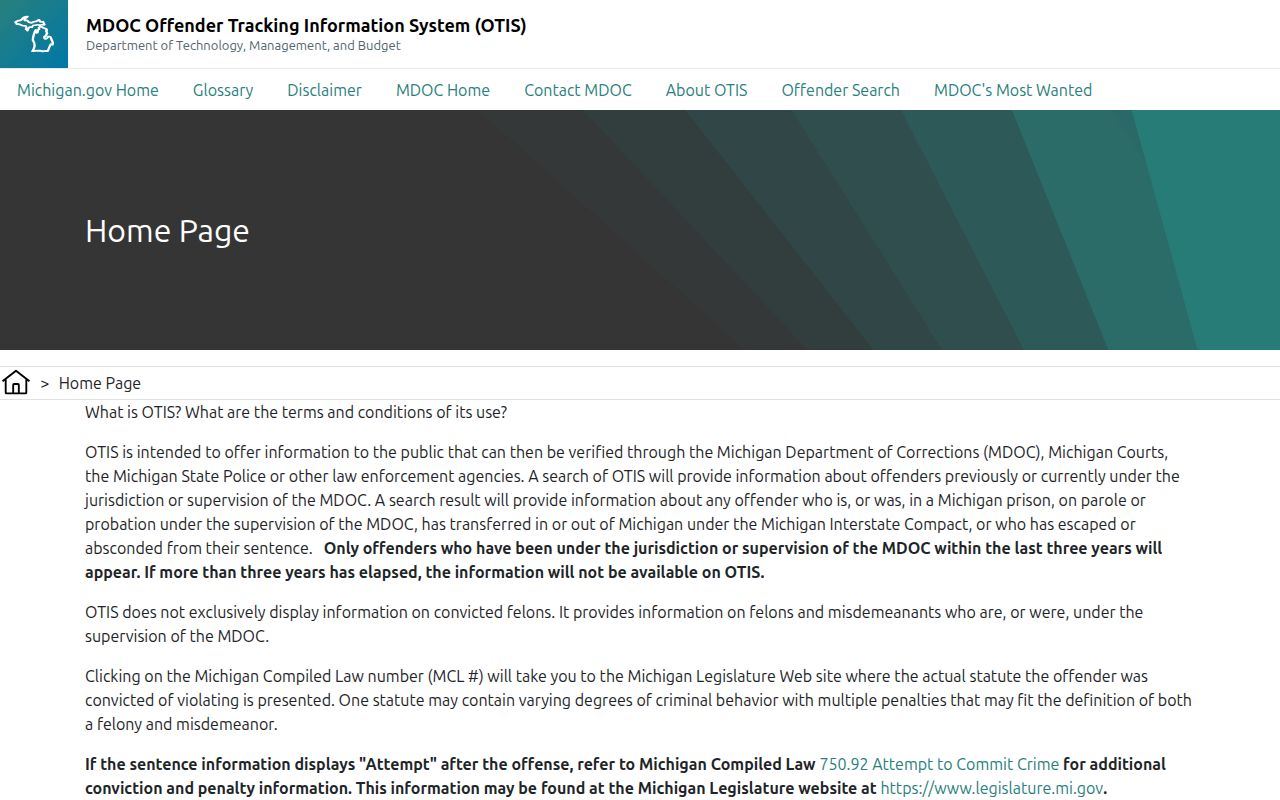
The search’s statewide scope is essential because a former Ojibway prisoner may have completed custody at another Michigan facility.
Ojibway Release Date Meanings
Michigan’s “Parole Board Jurisdiction Date” is not a scheduled gate date. OTIS describes it as the Earliest Release Date for a prisoner, meaning the first date the Board may have jurisdiction under the sentence and applicable rules. A Board denial, deferral, other sentence, detainer, court change, or release processing can affect what happens next. It must not be reported as an actual Ojibway release.
- Date Paroled
- The actual date an MDOC prisoner left prison for parole supervision.
- Parole Board Jurisdiction Date
- An eligibility or Board-jurisdiction point, not a promised departure.
- Maximum Date
- The potential maximum sentence endpoint under the controlling record.
- Location
- A prison or supervision assignment that may not be a present physical site in every status.
For a probationer, the jurisdiction-date column serves another purpose and may represent the supervision-release date. Status and record type must accompany any date. A photograph, when present, is an MDOC correctional image and does not prove current custody or release.
Obtain Ojibway MDOC Records
When OTIS is too recent, too brief, or no longer displays the person, use the MDOC records guidance. A narrow request can seek the transfer, parole, or discharge record relevant to the question. MDOC describes a PENPACK for a paroled or discharged person. When available, it can include certified judgment, presentence material, eligibility information, fingerprints, a discharge certificate, and an offender photograph.
Request only what is needed. A discharge certificate is more direct for formal discharge than an entire file. A parole order and Date Paroled address prison departure to supervision. If the issue concerns the sentence rather than MDOC processing, contact the sentencing court. Court-originated errors should be corrected at the court, while supervision or location errors go to MDOC or the assigned office.
Legal exemptions and redactions can apply. A public OTIS screen is a timely indicator, but it is not a certified record and can change. Preserve the source date and distinguish what the online system displayed from what a formal agency document establishes.
Ojibway Versus Active Prisons
MDOC maintains a current prison directory separate from its closed-facility archive. The current MDOC prisons page is useful for checking the actual institution tied to a live record.
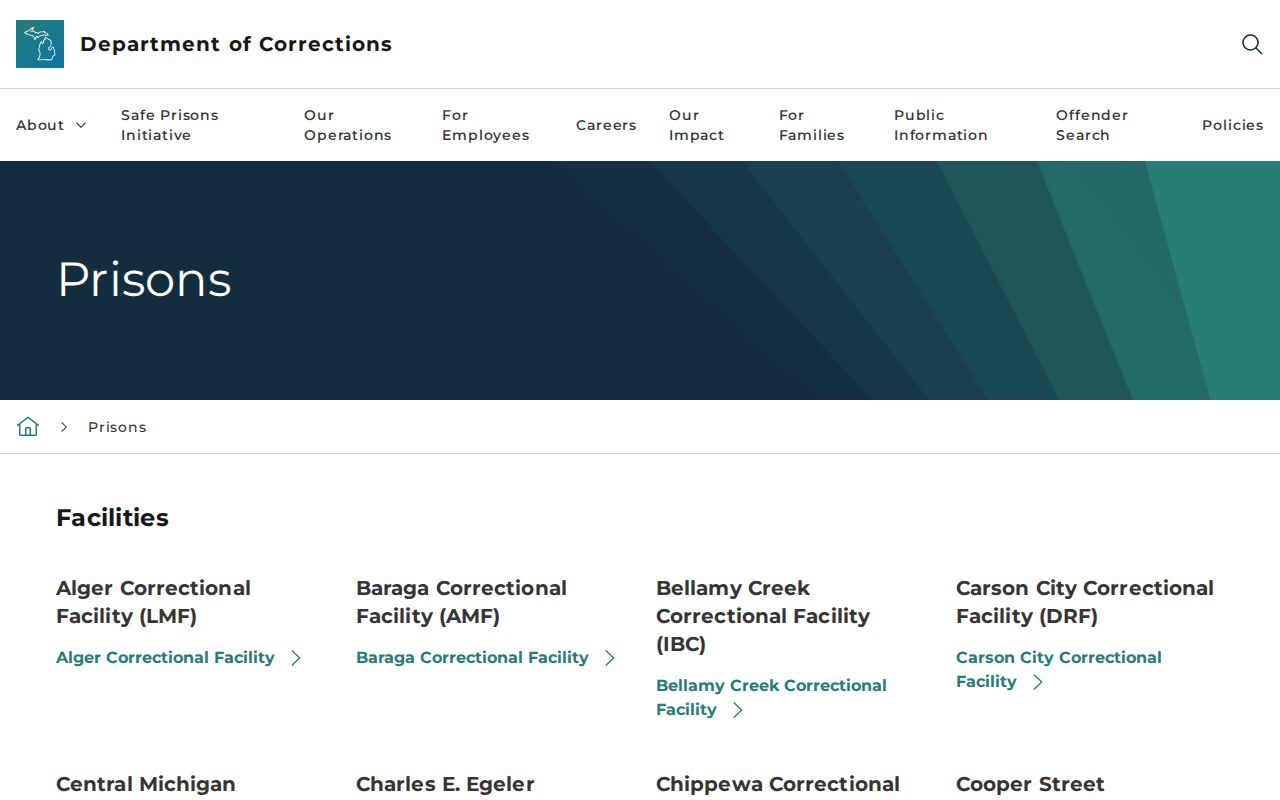
Ojibway’s absence from an active role and its placement in the closed archive prevent an obsolete facility listing from being treated as a present release destination.
No other active state prison, federal prison, ICE detention center, USMS detention facility, or separate municipal lockup was identified inside Gogebic County in the official-source sweep. That geographic result does not mean county residents never enter those systems. It means the search must follow the custody authority and actual facility, which may be elsewhere.
Ojibway Historical Record Contact
Ojibway has no active release desk, inmate line, visitor schedule, or current gate. Present questions belong with MDOC, OTIS, the listed current facility, the supervising office, or the sentencing court. Do not travel to the former site to seek a current prisoner or release. The official closed-facility page is the proper source for location history.
Ojibway Correctional FacilityMarenisco Township, Michigan
Former Michigan Department of Corrections prison
Closed December 1, 2018
No current release or custody contact
A former Ojibway placement also does not establish current assignment to Gogebic County parole and probation. Check OTIS for the supervision location. The Gogebic supervision page explains why the courthouse office applies only when the current record ties the person there.
For an identity question, compare the MDOC number first. Names can change, and people may share the same name. Birth date, conviction information, and a photograph when available can help distinguish a result, but only the minimum details needed should be repeated. A missing photograph is not proof of a false record. MDOC notes that some older people lack electronic images and some current records may not yet contain one.
Ojibway Is Not County Jail
Ojibway was a state prison for sentenced MDOC prisoners. The Gogebic County Jail is an active county facility for local custody and county sentences, and the Sheriff’s Office operates it. Their searches are not interchangeable. OTIS can track an MDOC prisoner or parolee but explicitly omits county-jail-only people. The Sheriff’s release record can document a county jail departure but cannot prove a later MDOC parole.
A local departure to MDOC is a transfer. Search the C32 felony judgment and OTIS to follow it. If a former Ojibway prisoner later left prison on parole, Date Paroled and `PAROLE` are the strongest public indicators. If OTIS shows `DISCHRG`, confirm the meaning and obtain the formal record when the distinction matters. The Gogebic County release search routes each custody type to its correct source.
Keep the source date with any saved result. OTIS can change as MDOC processes a transfer, parole, discharge, correction, or new supervision term. A dated screenshot shows what appeared then, not an unchanging certified history.